Alma lives in a rural village where she grows a garden, raises animals and cares for her young children while her husband teaches at a nearby university. Celeste lives in the city, where she makes ceramics, travels in style and curates a worldly sensibility while raising her sons. Both women seek a rooted contentment beyond the scope of their own access, a life of creativity, agency and fulfilment. Only one of them is real. The Shame follows Alma as she hurtles down a dark highway, alone, in a search to find out which one it is. A modern fable both blistering and surreal, The Shame explores the remote landscapes of desire and envy, revealing how in a world increasingly shaped by digital fabrication, what we imagine, and how we act on it, can either free us or become our undoing. From the author of Helen of Nowhere comes another wild ride through the caverns of the contemporary psyche.
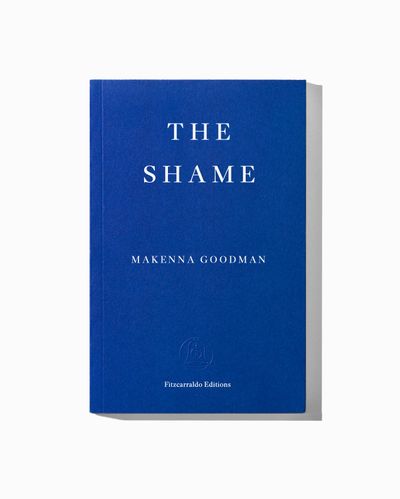
The Shame
French paperback with flaps, 140 pages
Published 28 January 2027
The Shame
ONE
Imagine you’re in the middle of the state of Vermont, on a tiny island the size of a shoebox. Around you is a lake of boiling lava, so hot that it burns up anything it touches. In one hand you have an endlessly replenishing supply of undercooked egg whites and a straw. This will keep you alive for a long and unhappy life. At the edge of the lava, miles and miles away, the heat ends and there is a lush and beautiful forest, meadows with wildflowers, bubbling brooks with salmon and little icicles and wild mint. There you can eat whatever you want. There you can eat pasta with clams, pasta with cheese, pasta with toppings unlike anything you could imagine – and there are salads with every possible ingredient and really good dressing – all of which will be available for the rest of your long and happy life. But to get to this magical place you have to cross the hot lava, and you can’t have a flying machine. Would you do it? How would you do it?
Here’s how I would do it. I’d take my gun, because you didn’t say I couldn’t have one. I’d take my gun and I would look up in the sky and I would see a giant flock of migrating geese. I’d put my egg whites down on the shoebox island and aim my gun and shoot a goose, which would fall down into the lava beside me. Because of the size of the goose, only the bottom half would burn instantly, and I’d have two seconds to use the top half as a stepping-stone. By this time I would have already shot down a second goose. As one foot lifted off the first bird, the other foot would be landing on the second, and by then I’d have shot down a third. I’d be in a spree of shooting geese one by one, rapid-fire, and dead geese would be raining down on me, dropping into the lava in a line, and I’d be hopping from one to the next while shooting down more, and this would go on for hours and hours – until, finally, I would have shot down the very last goose, which would take me to the edge of the hot lava, and I would jump safely onto the shore of the bountiful pasta and salad forest, and I would live happily ever after.
There are few moments in our lives when we are truly nowhere. I had experienced this feeling only a couple of times: Once, on top of a mountain that I had scaled just after dawn. Again, at an indexing conference; the hotel I stayed at was filled with all shades of corporate people convening, and I spent what turned out to be a great night watching pay-per-view and ordering lasagna to my room. And now, as I drove through darkness on the interstate.
I messed with the dial until I got to public radio jazz, which, aside from my thoughts, was my only company. As I drove, I began to notice a sensation in my body that was unmistakably good, even euphoric. I was free. Behind me in the back seat were two empty car seats. No one was asking me for a snack, no one’s nose needed to be wiped, no one demanded the same song be played at top volume over and over. I turned my music up and drank some water. I never went anywhere without my water bottle, and there was always a full one in my car. I never got my hair cut either. The hairstylist always does shit you don’t ask for, and you leave looking like a senator’s wife. I do the two-hack snip after the shower, and I always look fine.
I put my water bottle down onto cough drop wrappers in the cup holder and saw a half-sucked one stuck to the console. Next to it was a crust of stale bread and some broken baby sunglasses, like bird skeletons. My engine light was on. What was I doing? This was too extreme. At the next exit, I told myself, I would turn back. I could get home while the kids were still asleep. Asa would be amazed I had gone as far as I did. Maybe that distance was enough. But the portion of interstate I was on had very few exits, and I was low on gas. I kept driving until I reached the next rest area and pulled in to fill up the tank. It was cold. Mine was the only car at the pumps. I went in to use the bathroom and met no one. By the time I got back into my car, I had made my decision.
How did I get here? Who registered my car? Who scrambled my eggs, took me to the dentist, made corn on the cob, refrigerated the butter? I dive into the pond but emerge the same person. I push around the shopping cart, and another woman’s hands grab the granola. I am Asa’s wife. I want to go to a party, he doesn’t. So I stay home. I want to go to a town meeting, he doesn’t; I go but then come up with an excuse to leave early and drive home fast on icy roads. He turns over in bed snoring the second the light goes out, I lie there staring at the dark air above my head. He went on a fishing trip with Phin and came back, was all over me, oh how he missed me. I wanted to stay up and watch Netflix and eat popcorn in bed. Maybe if I lived in Paris. Maybe if I were fifty-two, had a miniature poodle, were a famous painter with a yellow sports car and a rubber plant in a giant pot and a coffee table covered with elaborate silver teaware. Not in this life, Asa says. You married the wrong person. Oh, but what the fuck does he know, with his elbow patches? I can reupholster the couch, I can adopt a puppy, I can wear whatever I want, do whatever I want to do with whomever I want to do it with. Maybe if I wrote a successful novel, I would go to Paris to celebrate, dance on tables and smoke a pipe. Maybe if I hadn’t skipped history class in high school to smoke cigarettes in the alley, I would have a doctorate in international relations and would live in Paris for my job. Maybe if I had stuck with my singing in middle school, I’d be in a conservatory and would go to Paris each month to perform. I would stay in a rented flat, I would know the landlord. I would buy groceries and carry them in a woven bag.
I was stalked by an ex-boyfriend in college. He would show up at my window at four in the morning and throw pebbles, demanding that I see him. I told him calmly, and then more forcefully, to go away, and a week later a shoebox arrived on my front doorstep. Inside was a dead squirrel. This seemed like the last straw, like I would be the next to go. Wasn’t that the message he was trying to send? I took the shoebox to the college counselor to file a complaint, along with my best friend, who was also my housemate. The administration building was low, made of cement like a storage unit. The counselor asked me if perhaps this was his attempt at romance. Maybe it was misguided, she conceded, fine. She recalled her childhood in Kansas, where boys used to climb up a tree and knock on her bedroom window, where kids would beat each other with sticks on the playground and then go home for cookies and milk. I told her another story, about a time when the same guy came into my living room with a gun, pointing it at his head and then mine, alternating. (My friend had shifted in her chair; the story wasn’t true.) The counselor paused, then, tucking a tissue she was holding into her shirtsleeve, told me they’d park a public safety vehicle outside my house for two days. In the meantime, I should think seriously about taking a leave of absence: go home as soon as possible, she said, pack my bags today, wait until the guy graduated, then come back and finish up my classes, take my finals, write my thesis. This was the plan she had for me, and she started closing her folder as if to say, “Time’s up.” I walked out of there and decided just to leave it all up to fate. Life went on as usual; the 4 a.m. visits subsided and he shacked up with a field hockey player. Latest news is he’s representing women in domestic abuse cases. I guess I got lucky. But the way she tucked that wet tissue into her sleeve really stuck with me. I kept wondering if it was just a thing people did, old people, to save paper. Or maybe she didn’t have pockets.
A few years later I was living in Madrid, interning at a film company for the summer and renting a room in a colorfully painted apartment in Chueca with other foreigners. The landlord came up to talk once a week, shirtless, jiggling, and we’d share slices of the peaches I bought compulsively at the fruit stand downstairs. I slept in the pink room. It had a high ceiling. I could hear the discotecas bumping, but I went to bed early. That year was the hottest summer on record, and you could only walk on the shady side of the street. No one went outside from noon to two. I slept with the fan on high five inches from my face, and one morning I woke up and couldn’t move my neck. My employer recommended a massage parlor down the street from our office, and the next day, after doing a piss-poor job of translating the film company’s website copy, I went in for an appointment. The massage therapist was a man with long hair. There was Muzak and lavender. After the back massage I flipped over, and he ventured down to my groin. He inserted his fingers in me, pressed them against my pubic bone from inside, explained to me in broken English something about pressure points. He proceeded cautiously, waiting to see if I approved. I told him I was getting a migraine and went back to the office, where I said nothing. We had bocadillos for lunch, gazpacho. I spent the rest of the summer in solitude, walking instead of taking the metro because there had been a bombing. I sometimes visited the vintage store across the street from my apartment; the manager was fun-loving and we would laugh about bullshit. I read English gossip magazines. I was lonely. I didn’t want to get blown up, it was so hot, and I had the ache in my neck that wouldn’t go away. Why didn’t I tell anyone? Oh, please.
It wasn’t just the bombing. Ever since I was little, I’ve been terrified by the idea of untimely death. Having children only made it worse. Waves of fear will wash over me while I’m scrubbing the dishes or driving my children around for a nap, or when they have fevers and I’m next to them in bed with a cool cloth, counting their inhalations. I imagine my kids bent over, shoulders shaking while they weep, calling for their mother, their father unable to find the right words to soothe them. I imagine them cold and alone in their beds, crying out in the night for me, and me not being able to wrap them in my arms, to tell them it will be okay, to comfort them. I will be dead. Forever. I have written “put together a will” on my to-do list every week, but I never actually do it. I worry that once I have my affairs in order, I will drop dead right then and there.
The thing that frightens me most, maybe, is the idea that Asa (or, if he dies first, my kids) won’t know what to do with my body. I imagine what they will say: “Bury her in the local cemetery, so we have somewhere to visit.” But then I think of the work involved: the beating back of the weeds with pesticides so the grass looks like a golf course; the interminable mowing; and then the space the dead take up when there are living people who need room for shelter; and the chemicals pumped into hollowed-out bodies that lie like mummies in tombs; the deterioration, slowly fleshing off to bone while the toxic death makeup leaches into the groundwater; and the skeletons that are there for all eternity, gaping, with their clothes still on, their braids still growing!
“Cremate her,” they might suggest, and that option is also no good – how would they know the ashes were mine? “Compost her,” Asa’s more radical peers would say. “Inoculate her with spores.” But wearing a mushroom suit in a hole in the ground? Perhaps I’m too vain.
As I drove, I imagined the scene of my memorial, and what began as terror morphed into a state of enjoyment and relaxation, so that I began tapping my hands on the steering wheel to the future rhythm of beating drums and kids playing tambourines. My shoulders dropped a little. I let myself release into it. I turned the music up, letting it swell along with my reverie as I drove.
Here’s how it will go: Asa will invite my community to a weekend camping trip in the mountains. Everyone will drive there, having time to think in the car, passing small towns and meadows full of wildflowers, listening to songs from the past on the radio. They will arrive at a suitable site, near a stream, and set up camp, and they will bring me over to the creek and wash my body with cold water. They will try not to slip, but they’ll inevitably get wet. Then they’ll dab my skin with rosewater and organic oils and place a bundle of lavender in my hands, tied with simple twine. They will wrap me, naked, in a white linen sheet, and carry me back to the campsite on a cliff with a view of mountains. There will be a pile of wood prepared for a bonfire. They will place me on top of the pile – I guess using a ladder – and the music will begin. Everyone who wants to will play an instrument, in a circle surrounding me, and there will be singing. My friends are talented; this will be a memorable display of their artistry. There will be maracas, shakers, fiddles, whatever they feel like playing. There will be children dancing. Maybe my children, maybe my grandchildren. There will be songs I loved, old folk songs, old blues songs. The fire will be lit. Asa – or, if he’s dead too, whoever is in charge – will make sure it burns bright, even if it means adding some sort of gas. (Me being partially burned is not an option.) And then, as the flames rage, the music will die down, and there will be a picnic where people can share memories or stories as they please. There will be good wine and beer, a potluck. Someone will remember to bring the chips and that store-bought onion dip I always hovered around apologetically at children’s birthday parties. People will have the option of weeping into their salad, but grief won’t be a requirement. The idea is, celebrate. Then, after I’m all up in smoke, the campers will pack up their things and leave me there, hovering like a low cloud cover, as they depart to a bed and breakfast or a distant campsite with clean air. If the memorial starts in the morning, I want them out by dusk. No sleeping out there in the dark. I’ll be gone, but they’ll be alive.
I found myself looking forward to this moment, some small part of me, even though I fear death utterly. Just knowing I can control it, through planning the details, calms me. I want my kids for years to come to remember the celebration, the burning, the feast, the music, the washing of my body in the cold water. I want them to be able to go back to the site year after year if they feel like it, to collide with nature, not a fixed and frigid tombstone, and to come to terms with the fact that I am dead, that they will lose others, that they too will die and so will their kids. If their response is to resent me, then so be it. But eventually, they’ll thank me.
If the day of my death is soon, there is a letter that I want someone – maybe Asa – to give to my kids. I have left this in a file marked “Important,” and it goes like this:
You two, I’m writing you this letter in the event of my untimely death. I want you, when faced with sorrow and the inevitable yearning to hear my voice, to be able to read my words, meant for you and only you. Can you remember my voice? I want you to know how hard it was, to leave this world, to know – whether on a conscious level or not – that I would never get to hold you again, smell your breath, cut your eggs up, pour you milky tea, caress your softness.
My great fear, which has kept me up nights for years, is that you will have to live without a mother when you need one the most. And now, perhaps, that fear has been realized. But your lives have to go on. There are still peanut butter sandwiches to eat, even if I’m not making them; they’re just sandwiches. You can still feed the crusts to the dog. Someone will fill your water bottles, brush your teeth with you. There will be someone to make sure you are taken care of. But what will you do when the grief becomes impossible to bear? Your father: he knew me best. He took the broom and dustpan to my corners. Just ask him – anything – about me. He’ll tell you the story of the day we spent at North Beach, shrieking in the water, chasing your kickboards, eating twist soft serve at a picnic table, watching the bodies of Canadian tourists. He’ll tell you he couldn’t even look at them, how no one could compare; he’ll give a grandfatherly wink. He’ll tell you how we biked as the mountains cut out of the water, how Phin went five miles without stopping at age four, no training wheels. Or he’ll tell you about the drive to the birthing center, me on hands and knees in the back of the Subaru with one seat folded down and rain falling in sheets as he drove seventy-five miles an hour on winding country lanes, how the pimply nighttime guard at the emergency room entrance couldn’t find the right key, how I held my legs together until he did, how we somehow made it around the corner to the hospital bed. He’ll tell you how we ordered breakfast sandwiches and seltzer from the birthing center café and watched professional soccer on the world’s smallest television, while I waddled to and from the bathroom peeing blood, calling for more ice diapers. Cuddling Eden in my arms like a seal pup.
I worked hard to love you, to make you feel loved, to have the world love you. I became old instantly. I became imprisoned by love, by impatience, by impetuousness. It wasn’t easy; I hope you will find the shadows comforting, in the end. I wish I could be there to defend myself.
Love,
Your mother
I change it about once a week.
[…]
‘The Shame is a delicious, important moral corrective of a novel for our moment of performance, obsessive witnessing and self-doubt, written in gripping and beautiful prose. Goodman draws a dark and suspenseful tale out of the feelings of envy women have for one another, fanned in this moment of high capitalism – a shame many of us know and feel, that reading this novel somehow helps disperse.’
— Sheila Heti, author of Alphabetical Diaries
‘Goodman writes with blazing clarity and admirable wit about the joys and sorrows of raising children. Her depiction of the longing, self-loathing and quiet rage that accompanies sidelined ambition is brilliantly complex.’
— Jenny Offill, author of Weather
‘The Shame asks the eternal question of “how did I get here?” in gorgeous, leaping prose. A novel to be returned to whenever life sows doubt.’
— Marlowe Granados, author of Happy Hour
‘A concise, intimate and troubling examination of a young woman building fantasy lives in an attempt to find value and meaning in her own existence. Behind this apparently small story lies a wider comment on domestic suffocation, modern motherhood and the insecurities engendered by the digital world.’
— Alice Jolly, author of The Matchbox Girl
‘The Shame is startlingly original…. Part of its pleasure is in the construction – the recursive loops through the mind of a woman who is breaking down from not making the art she absolutely must make…. More importantly, this is a novel about how you can feel driven to take risks that don’t matter in order to avoid taking the risks that do matter.’
— Alexander Chee, Paris Review
‘I had a delicious time reading The Shame – it scratched and soothed a very particular place that’s developed in me as a new(ish) mother. Makenna Goodman has a frighteningly accurate radar for what makes the honest and ugly parts of us tick.’
— Jo Hamya, author of The Hypocrite
‘The Shame is a wickedly smart, wry, raw interrogation of one mother’s choices. In sentences packed with wit and insight, Makenna Goodman’s entrancing debut explores the envy and self-doubt that come with selecting one sort of life over another. The reader shares the narrator’s desperate curiosity about how her madcap adventure will end.’
— Helen Phillips, author of The Need
‘Goodman’s writing is lush and propulsive, creating a compact world like a fast-moving car in the night…. [H]ere the material reality of Alma’s life is fodder for continual revelations about the traps of capitalism, motherhood and meaning.’
— Nathan Scott McNamara, Guernica
‘An intimate, compelling portrait of a woman under psychological tension.’
— Kirkus
‘Very funny and gutting.’
— Lauren Groff, author of Brawler
Makenna Goodman is the author of two novels, The Shame and Helen of Nowhere, which was longlisted for the 2026 Booker Prize, and has written for international publications including the New York Review of Books, the New York Times, the Los Angeles Review of Books, Harvard Review, The White Review, BOMB, The Common, ASTRA Magazine, RA Magazine and Mousse Magazine. Also an editor, she is based in Vermont.


